
Data Repatriation
Keep the cloud experience. Leave the cloud bill.
Public cloud is awesome — until the bill grows faster than the business, vendor lock-in gets harder to unwind, and regulatory requirements start dictating where data can live. Yet many teams stay anyway, and for good reason: their services are managed for them, everything works as one ecosystem, and that level of resilience is hard to rebuild in-house. Leaving is rarely about moving the bytes. It is about keeping everything that has grown around them.
Petabox handles the move end to end. We design the target architecture, run the new platform alongside your cloud, and migrate data and services in phases. Applications keep the same S3 API, service interfaces, and workflows. After the move, the same engineering team keeps operating storage and services as one platform, with multi-data-center resilience built in — so moving on-prem doesn’t mean becoming your own cloud operations team.
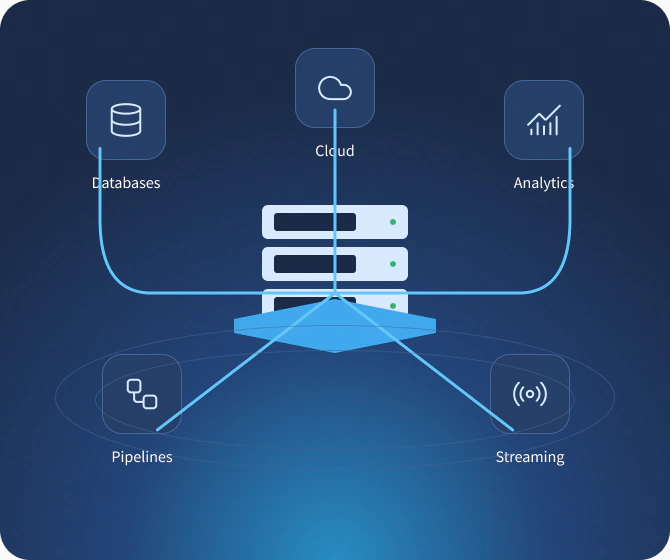
Map the existing cloud environment
Before anything moves, we map the storage footprint, data volumes, dependencies, network flows, and the services built around the data. That includes the databases, analytics, streaming, search, and pipelines that need to move with it.
We turn that picture into a migration map: what moves together, what can move independently, and what should stay where it is. It becomes the basis for the architecture, migration sequence, capacity plan, and validation criteria.
 Storage volumes, buckets, and access patterns
- Dependencies between data and services
- Network, performance, and availability requirements
- A migration plan built around the existing workload
Build the new platform first
We build and test the new Petabox platform before any production data arrives. We deploy Object Storage as the core S3 data layer, then add the required managed data services together with networking, monitoring, backup, and high availability.
We test compatibility and performance on test workloads in advance. The result is a working replacement for the cloud stack you already rely on, not simply a destination for copied data.
- Architecture built and tested in advance
- Object Storage and required data services deployed together
- Compatibility and performance tested on test workloads
- HA, monitoring, backup, and recovery included from the start
Keep applications and workflows familiar
For Object Storage, the S3 model stays the same: applications continue to use the same API, SDKs, and familiar workflows, with the storage endpoint changing underneath them.
We migrate PostgreSQL, ClickHouse, Elasticsearch, Kafka, and other services while preserving the interfaces, protocols, and operating patterns teams already know wherever possible.
- Change the endpoint, keep everything else
- No new storage API to adopt
- Familiar service interfaces and protocols
- Minimal disruption to existing application workflows
Run alongside the cloud
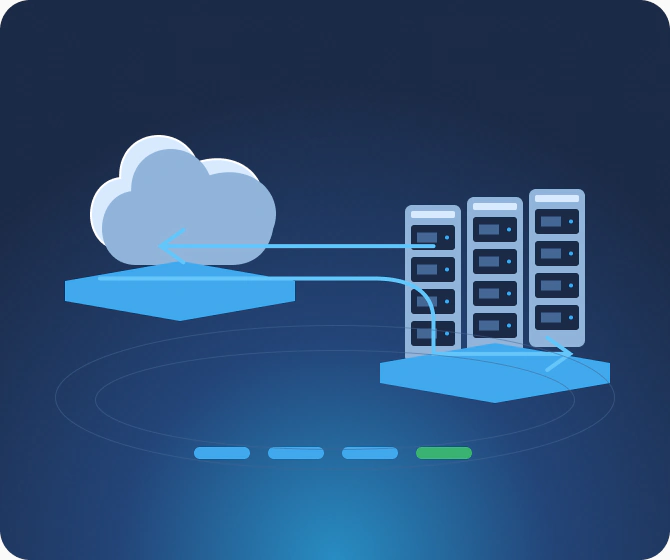
Repatriation does not have to be a big-bang migration. We run Petabox alongside the existing cloud stack and move data and services in phases, keeping both sides synchronized where the workload requires it.
We move historical data separately once the new platform has been proven. Where cloud providers offer transfer programs for customers moving workloads out, we factor them into the migration plan and verify the current terms before the move.
- Cloud and Petabox run in parallel during migration
- Phased migration of data and services
- Historical data moves last, once the platform is proven
- Cloud-exit transfer programs considered in the migration plan
Validate before you switch
Before production moves, we validate data integrity, S3 compatibility, performance, and service behavior against the requirements defined at the start of the project. We also test the surrounding pipelines, monitoring, backups, and recovery procedures.
We compare the old and new platforms on real workloads while both are live. Cutover happens only when the new platform has demonstrated that it can support the workload, rather than on an arbitrary migration deadline.
- Data integrity and compatibility checks
- Performance validation on real workloads
- Services and pipelines tested before cutover
- Cutover on proven results, not a deadline
Stay fully managed after the move
After the migration, the same engineering team continues to run Petabox Object Storage and the managed data services around it as one platform.
We handle monitoring, backups, upgrades, incidents, and capacity growth, including scaling and recovery when needed. You keep the managed experience that made the public cloud attractive in the first place. The infrastructure moves on-prem; the operational burden does not move back to you.
- Fully managed after migration
- One engineering team across storage and data services
- Monitoring, backups, upgrades, and incident response
- Capacity planning and scaling handled as the platform grows